Blogs
My Setup
General Keyboard - Jarne
A split keyboard that supports plover
https://shop.chenonetta.com/product/jarne-the-ultimate-keyboard/
Keyboard Layout
Gaming Keyboard - Wooting 60HE
Keyboard Layout
RnD
Keyboards
In this document I just go over the Software that I use across different operating systems. I try to keep consistency between systems so I keep most software the same. However there are always some software exclusive to a certain OS so I have linked those below.
To keep most of my software consistent I use Nix/NixOS.
On windows I use NixOS for WSL, so it's pretty much the same experience as linux terminal wise. I do install fd/ripgrep on windows though since I still need to use powershell occasionally.
MacOS I use nix darwin, so again the terminal experience is essentially the same, minus some packages that don't exist on darwin.
My Linux distro is NixOS, really tuned for productivity, still kind of janky which linux is sometimes. But I really wish I could bring niri to windows/mac since it feels so much better than the way MacOS/Windows handles that.
Specific software for OS's
Cross platform Software
Applications
Software that I have across all 3 platforms
VScode
Text editor, not always what I use (neovim being the other one), but does excel in certain tasks and there's basically a plugin for everything.
Calibre
What I use to manage books, syncs with my kobo, kind of feels clunky, but I haven't found really anything as featureful and good.
Obsidian
Note manager, uses markdown as the file format. I used to use orgmode with emacs, which I still think has some major advantages compared to Obsidian. Though the main issue for me is the lack of good mobile options.
Obsidian is also not open source, though that pain is mitigated a bit as you can move your notes elsewhere since it does just use raw markdown.
Anki
Flashcards, but it's actually pretty goated software, uses spaced repetition to get content into your brain.
Netbird
Like tailscale but open source, that being a VPN that I set up for myself.
Browsers
I kind of hate using more than one browser, but sometimes some websites don't work well on firefox based ones.
I have a list of Browser Extensions that I use per browser.
Floorp (Firefox browser)
Most featureful firefox browser i've found, can even (limitedly) run chrome extensions. I use Natsumi which makes my floorp more pretty
Vivaldi (Chromium browser)
Vivaldi is the most featureful chrome browser i've found. There is one part that kind of drives me insane though, which is that when I set up a custom search engine I cannot use <custom search> TAB "my search" it's <custom search> SPC instead, minor complaint, but I'm so used to the other method for my other browsers that it's engrained into me, and as far as I'm aware I cannot change this behavior.
Orion (Webkit browser)
I primarily use this on my Mac, still has a long ways to go (and also not open source) but can use both chrome and firefox extensions, feels really fast too. I have high hopes for this browser.
Terminal Applications
Atuin
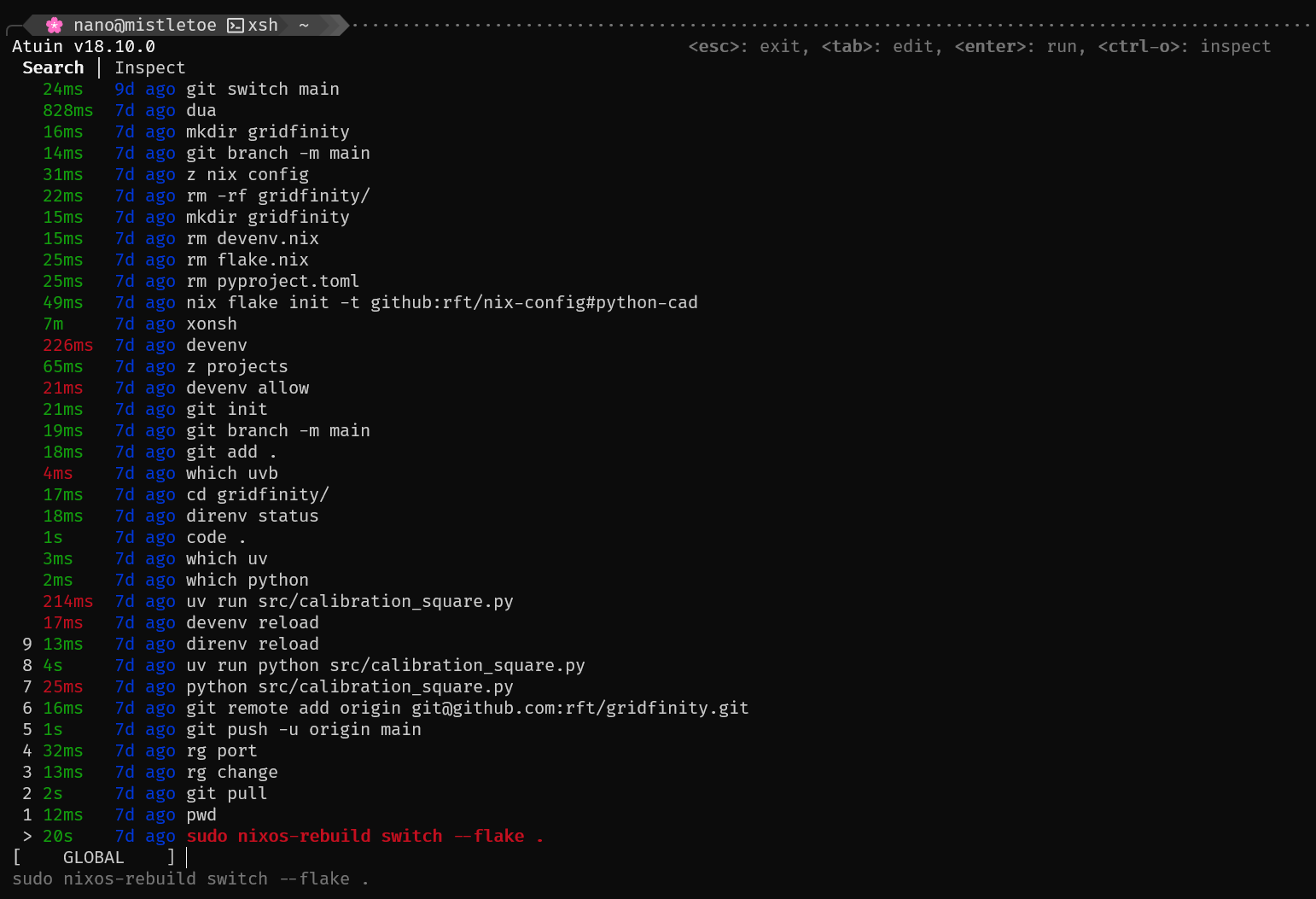
Shell history, shows up as a list <tab> to put command down for editing and <enter> to run the command. One of my favorites.
Bandwhich
Like task manager except for network related stuff. Can see what's eating your bandwidth
Bat
an alternative to cat, comes with syntax highlighting and a few other features.
Bottom
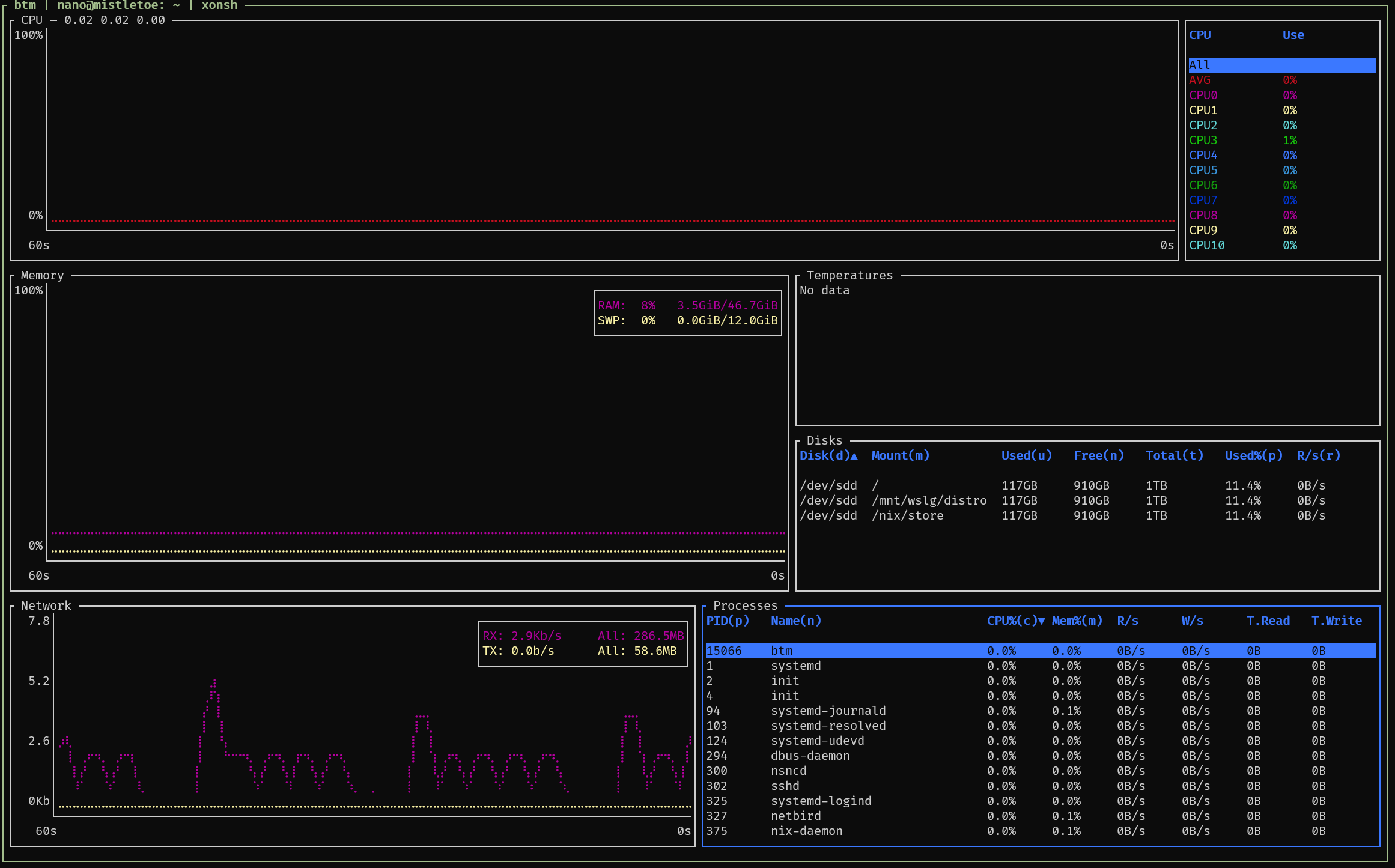
View information about cpu, disks, network, memory, etc. An alternative to htop
ffmpeg
Video tool, can do a ton of different things, I usually use to grab certain things from video files or stitch pictures into a video. But can do a lot more.
fd
like the find command, but I think it has sane defaults. Finds files for you
fzf
fuzzy finder, not too crazy in itself, but works well when mixing the output of other programs to.
Git
Version control, have been considering trying jujutsu though as a new way of managing changes.
jq
json processor, though I don't use it as much since xonsh kind of lets me use the python object, for it. Still useful sometimes though
pandoc
Document converter, can convert into a lot of different formats
pass
Password manager, most useful when setting up environment variables, you can set it to use pass for it. That way I can keep my secrets all in one place, and not completely be scared that I committed something bad.
procs
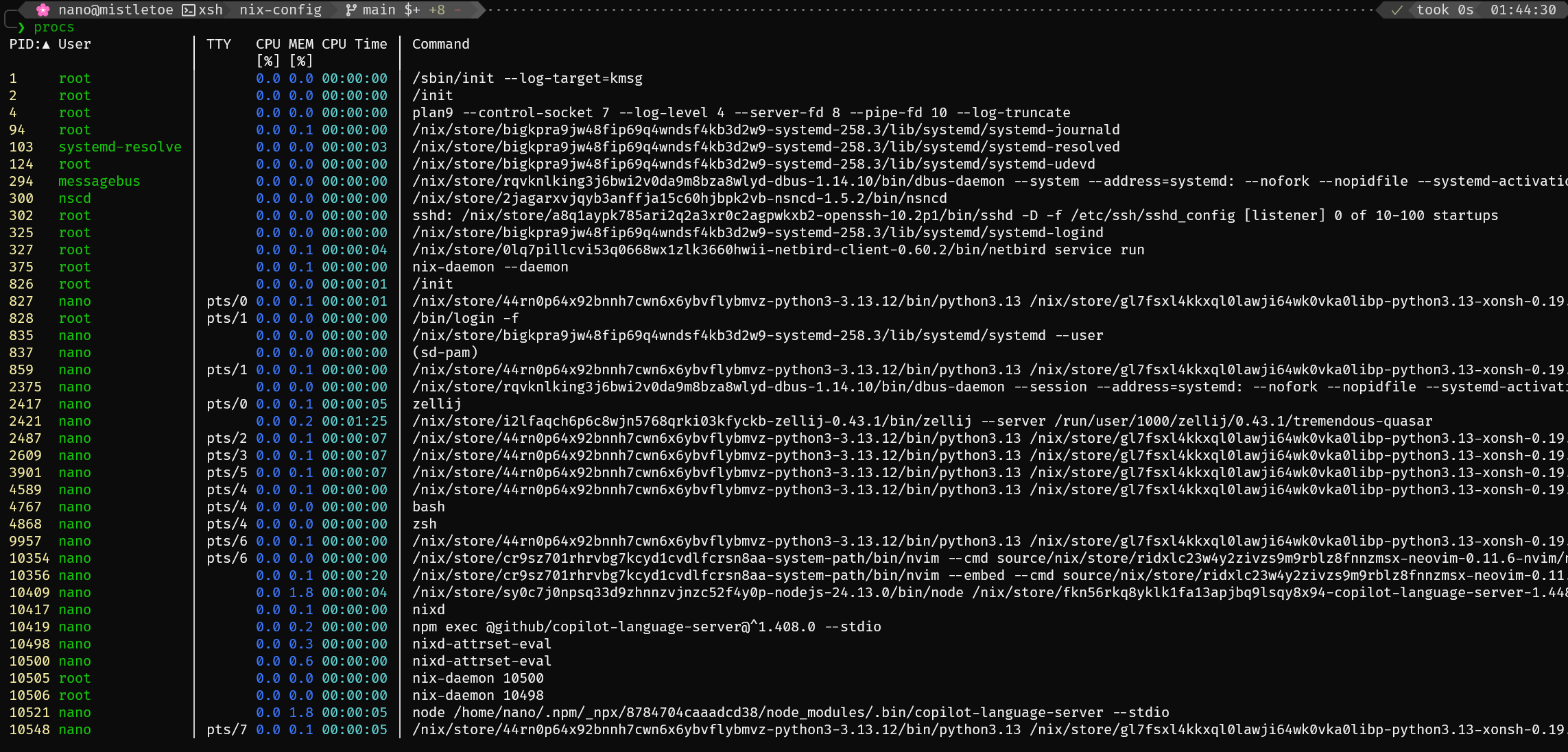
a ps alternative
rclone
pull data from cloud services
rink
Unit converter, based off of frink, but made in rust instead
ripgrep
grep but better pretty much in every way
rsync
sync data across remote machines, done over ssh, slightly slower than rclone, but can do more.
syncthing
File sync between devices
tealdeer
man pages but shorter, I prefer to use this first if I just need to get something working quickly.
tio
Serial tty tool
tokei
Count lines of code in a folder, I guess not entirely too useful but it's there
trippy
like traceroute and ping were combined together
Visidata
Terminal spreadsheet tool.
watchexec
run commands when files change, like a log or something.
wget
download files from the internet.
yazi
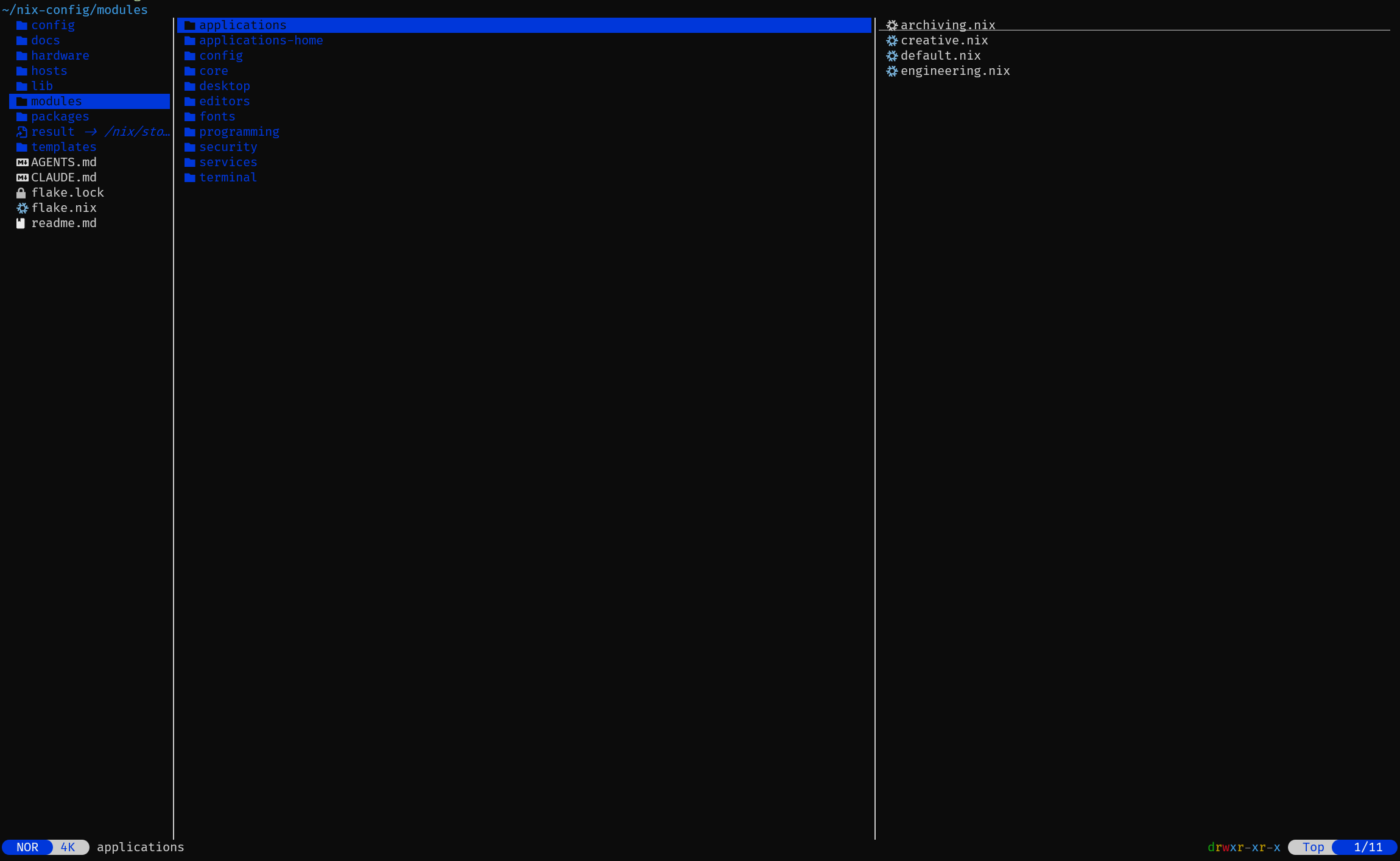
Terminal file manager
yq
jq but for yaml
yt-dlp
tool to download videos, not just youtube though
zellij
Terminal multiplexer, an alternative to tmux, really nice to use and has more sane defaults.
zoxide
a smarter cd, jumps to a directory based on frequency and some other heuristics, can match partially, very nice program.
Neovim
text editor that I use, used to use emacs, I miss it sometimes, but I got most of the functionality I wanted (I never really used lisp) my configuration is here
Software Setup
Final Result
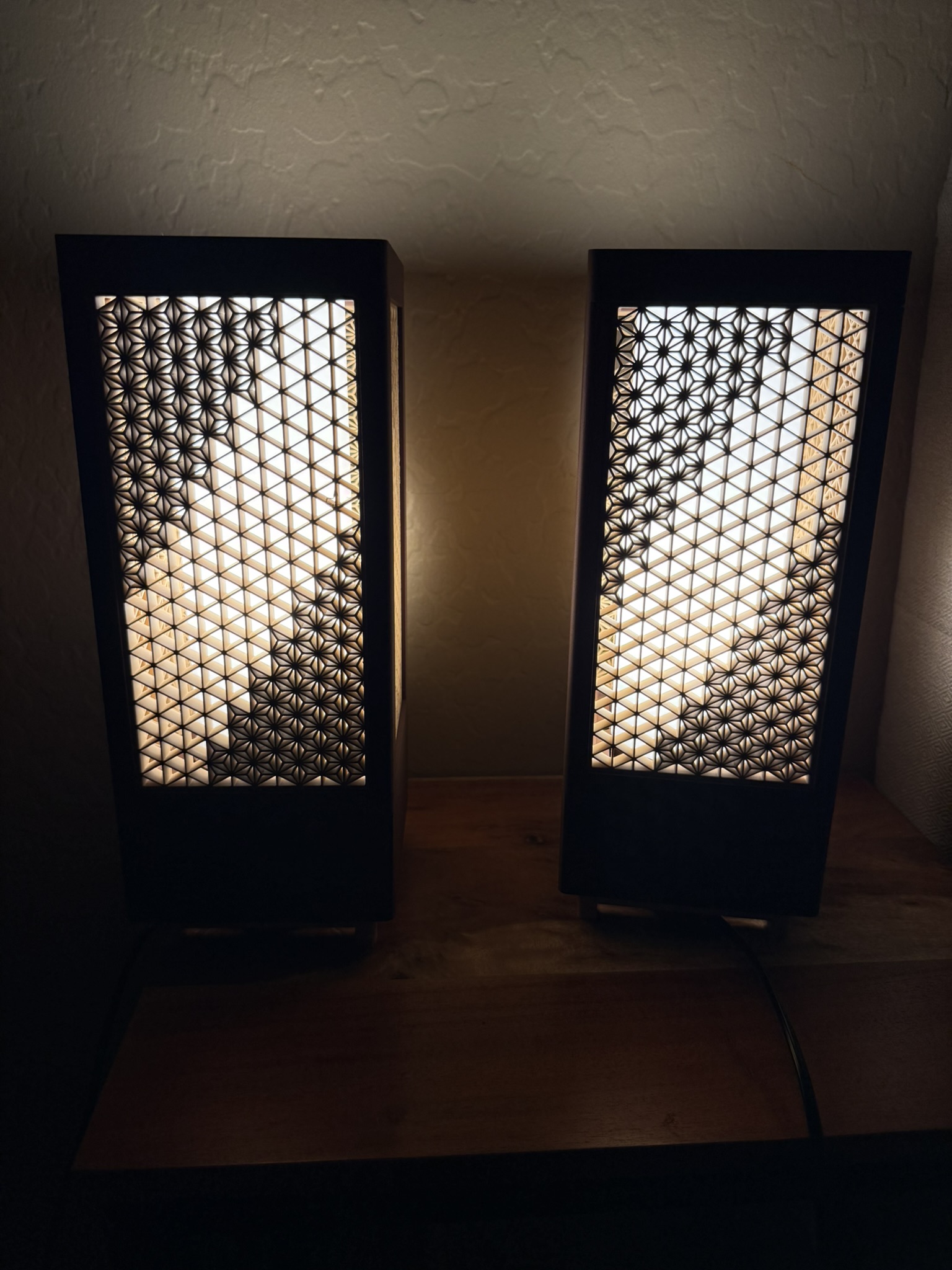
Party mode
Background
Kumiko is a very old Japanese woodworking technique that began around the 8th century. It is composed of geometric shapes that can make for some pretty cool designs. I am 3d printing them here because firstly it's pretty easy and secondly because real Kumiko builds cost way more than I'd typically ever want to pay for, which is understandable why it's so expensive given the intricate patterns and the labor it would take to produce.
The model I used: https://makerworld.com/en/models/1358686-customizable-kumiko-lantern-lamp-by-foxwood#profileId-1402877
Materials
Filaments
Parts
- E27 Socket (standard lightbulb socket)
- BT3 Button Head Cap Self Tapping Screw (BHCS)
- Phillips HUE A19 light bulb
| Item | Cost |
|---|---|
| PLA Rosewood filament | $24.99 |
| PLA Matte Latte Brown | $12.99 |
| PLA Matte Ivory White | $12.99 |
| E27 Socket | $3.42 |
| BT3 Button Head Cap Self Tapping Screw (BHCS) | $1.07 |
| Phillips Hue Bulb 2 pack | $71.99 |
| Total | $127.45 |
| Total without bulbs | $55.46 |
Probably not necessary to go with the rosewood filament. I just liked the color more, so I went with that. You can also use whatever lightbulbs, but I like the hue ones for my automations that I have set up, and for the fact that it uses Zigbee.
Also the bulbs I have are E26, but the socket mentions its compatible with both ¯\_(ツ)_/¯
The Build
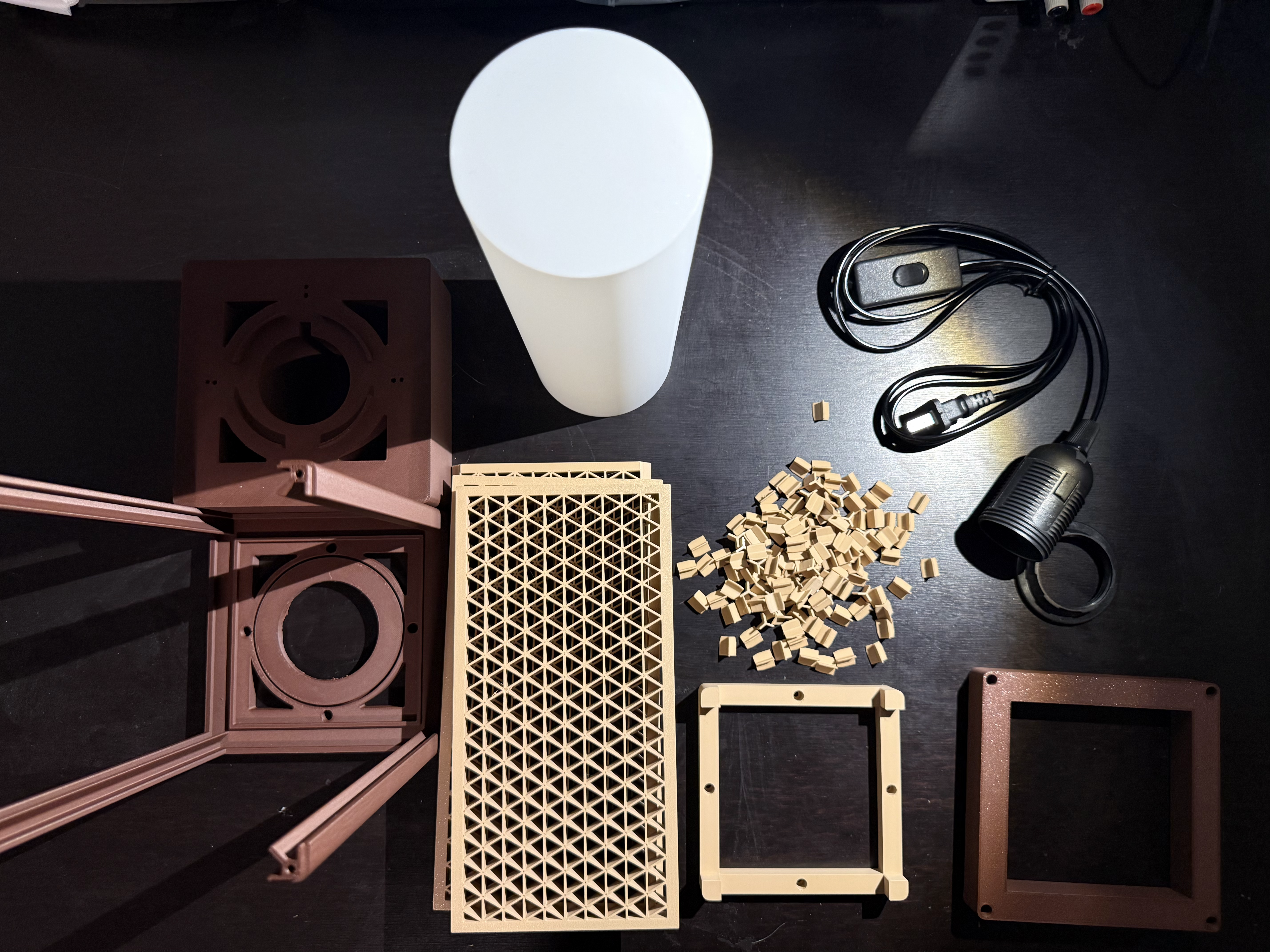
The Parts
*Ashanoa (the three pronged inserts) count is not accurate in photo
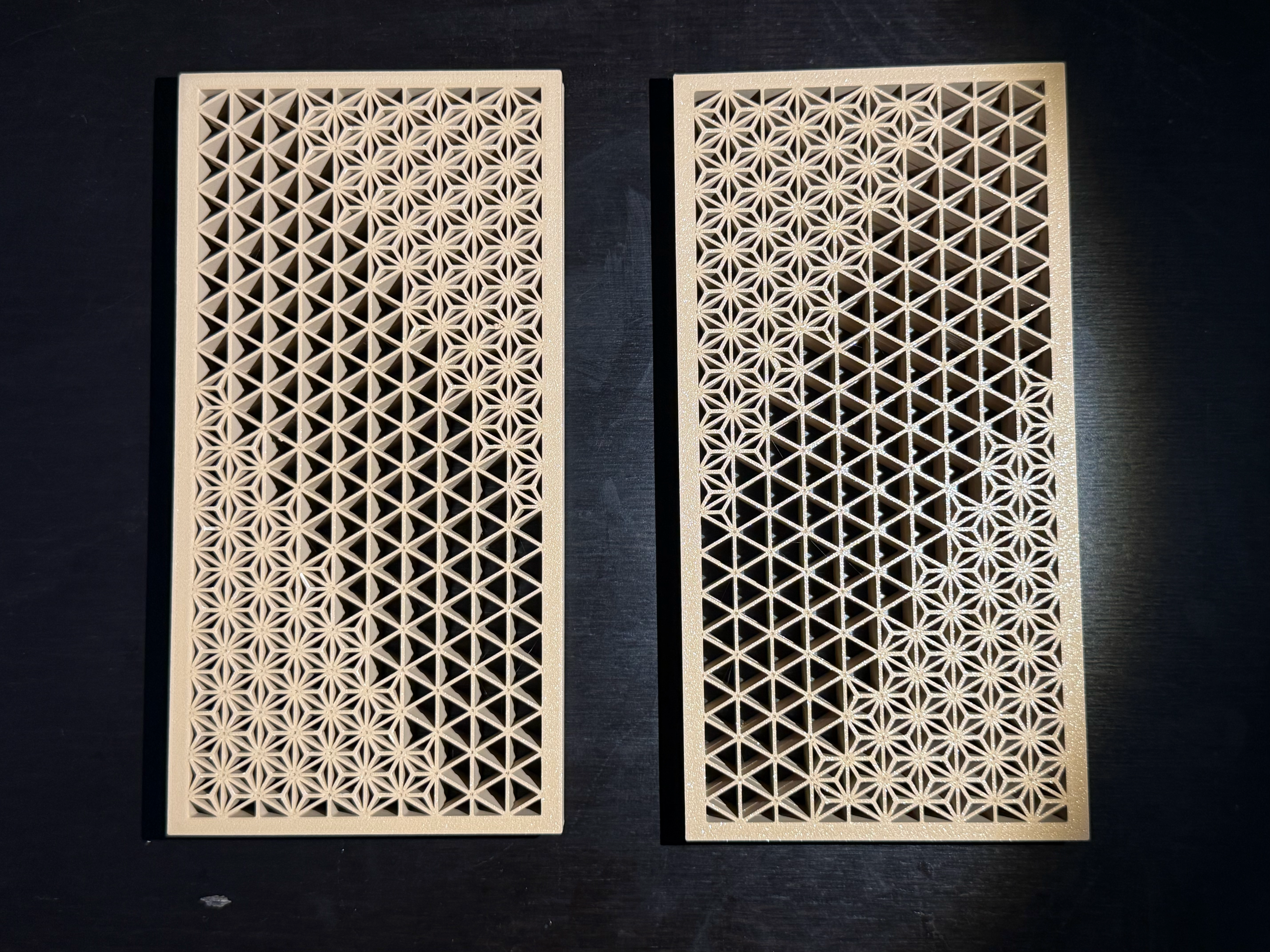
The Walls
You can basically design any pattern you want. There’s this website https://www.kumikodesigner.com/ that will generate patterns for you, but in my case, I'm just going to use the one that's already in the 3d print, as well as using the same angled design.
The amount of triangles that are in each wall are 35 (height) x 10 (length)
If you want to do the same angled pattern, either start on the 15th triangle down or the 21st up, and then go down in a staircase subtracting 3 triangles down each time in a staircase until you place 3 (or 7 across).
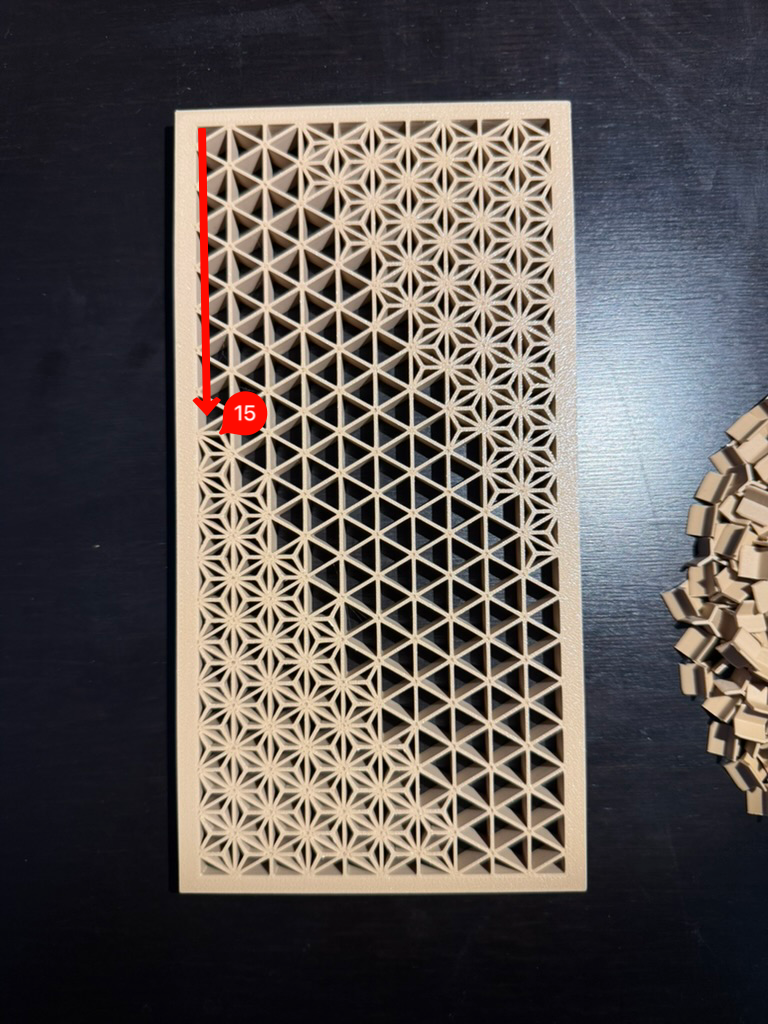
You will need 672 Ashanoas in total (84 for every diagonal)
I didn't count them I just did
>>> from functools import reduce
>>> reduce(lambda a,b: a + (b*3), range(1,8),0)
84

>>> _ * 2 * 4 # _ <- means to use last result, which in this case is 84
672
Because I am lazy. There is probably a more elegant way of figuring that out, but I'm only going to be doing that calculation once.
Once you have one wall panel complete, it's pretty easy to complete another one just by laying it on top of it and copying the layout.
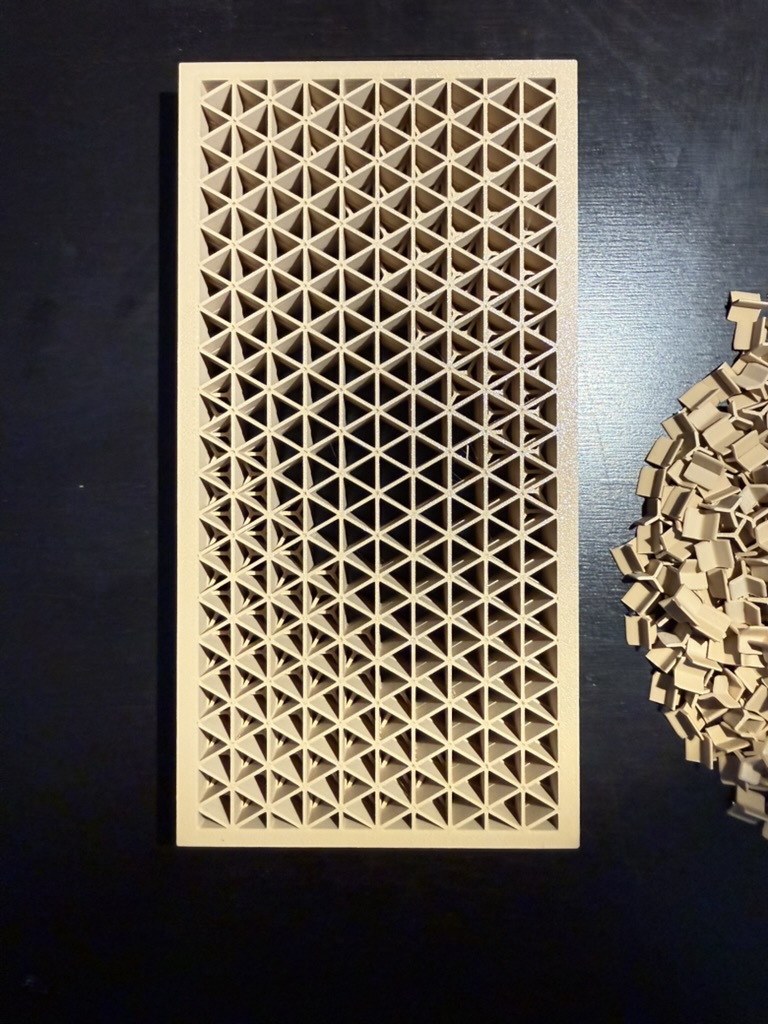
⚠️ Warning: Once you create two of an identical panel, you will need to create 2 more that have the diagonals on the opposite side. They will not be the same when rotated.
The Frame
The rest is pretty straightforward, so it will mostly just be pictures here.
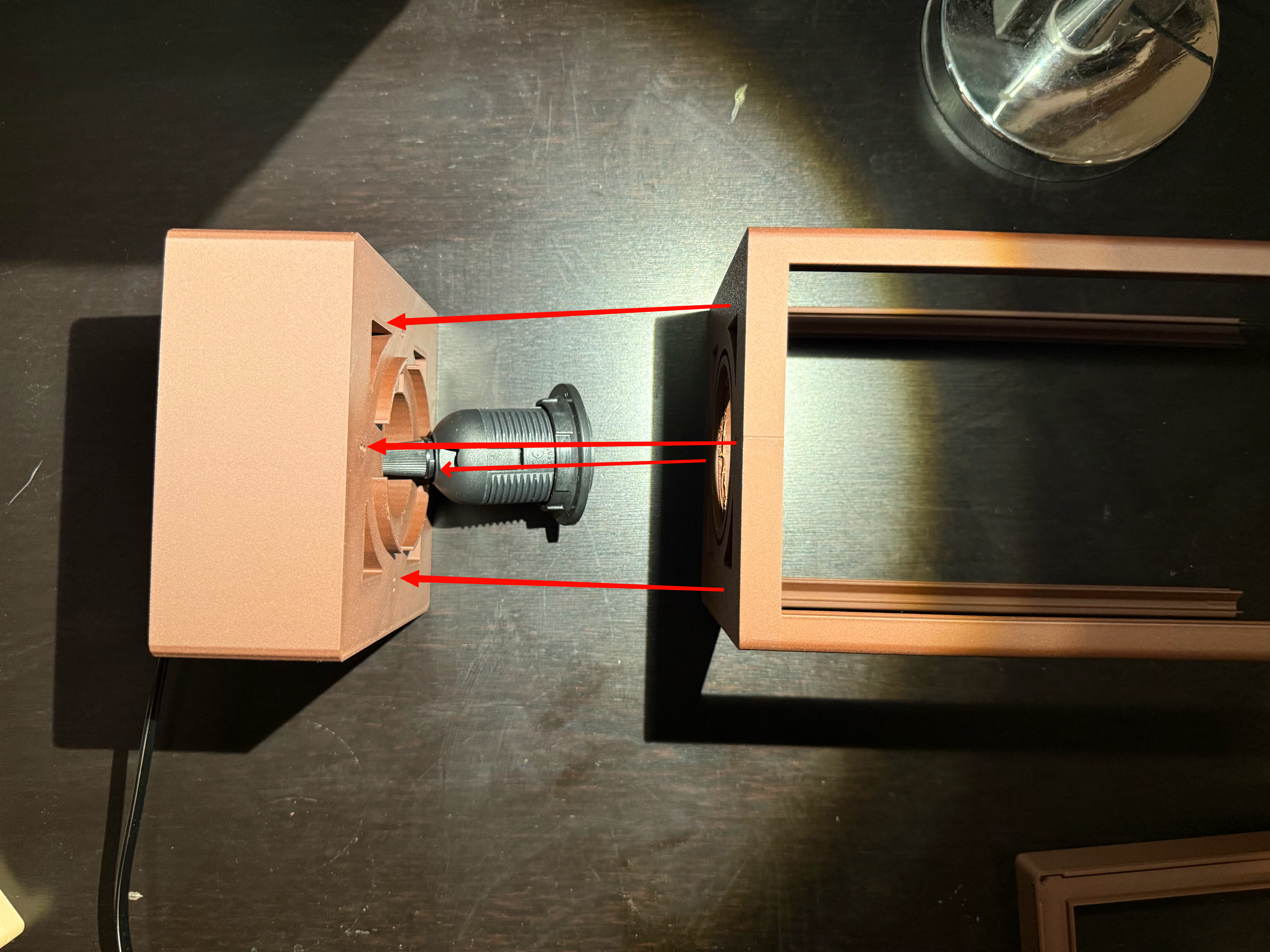 Put the socket in the large block, and make sure to screw on the overhang piece. Then connect four screws to the main frame from the top into the block.
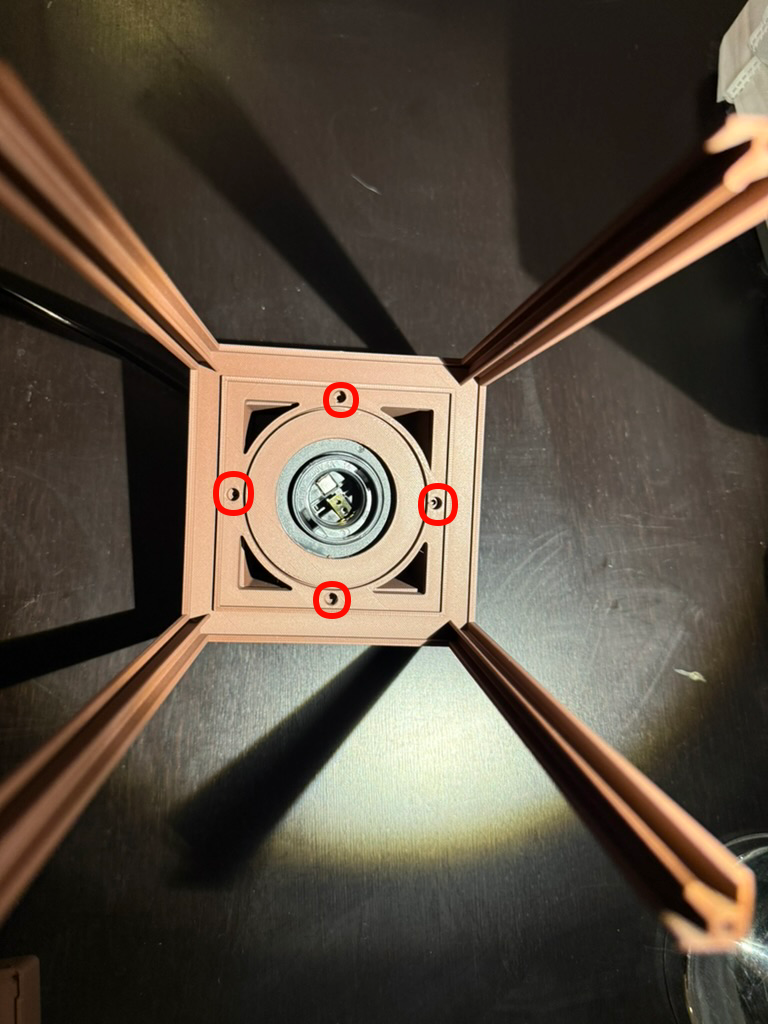
Make sure when screwing in, that it becomes flush with the block. Might seem like it won't be able to, but eventually it will.
Once that is complete, I flip the lamp over and attach the stand.
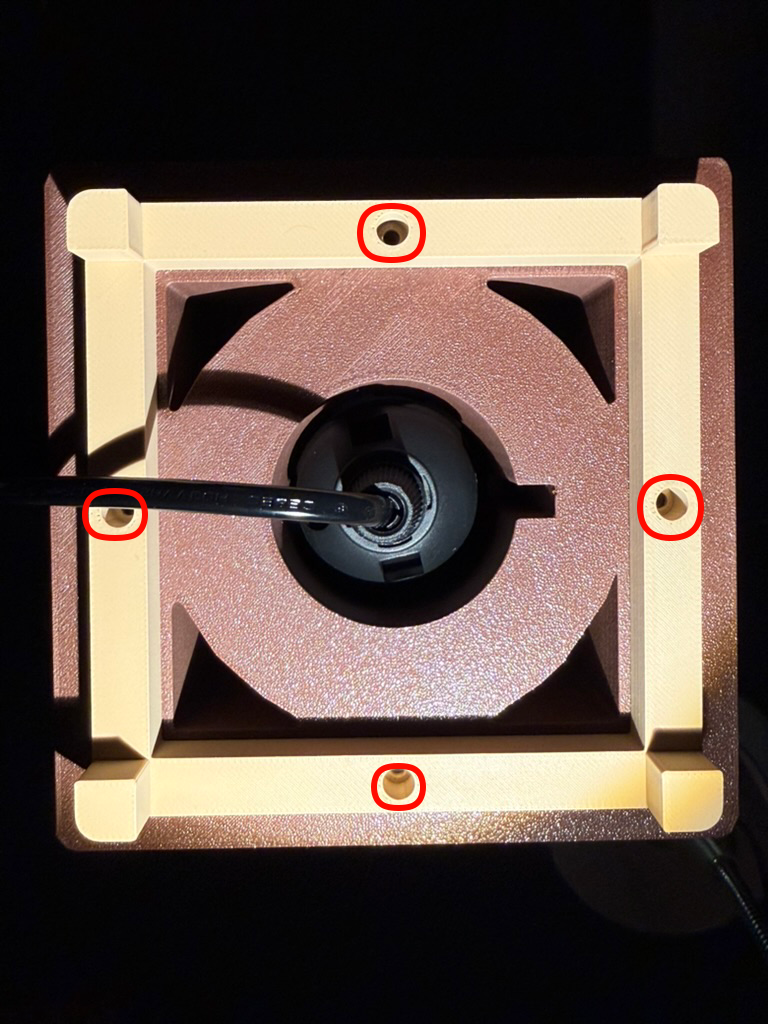
There are four more screws to screw in here. same deal as before with making sure it is flush. I believe this is also where the four pegs go in as well, but I didn't want to do that here so I did not insert them. If only because I like the look of this better
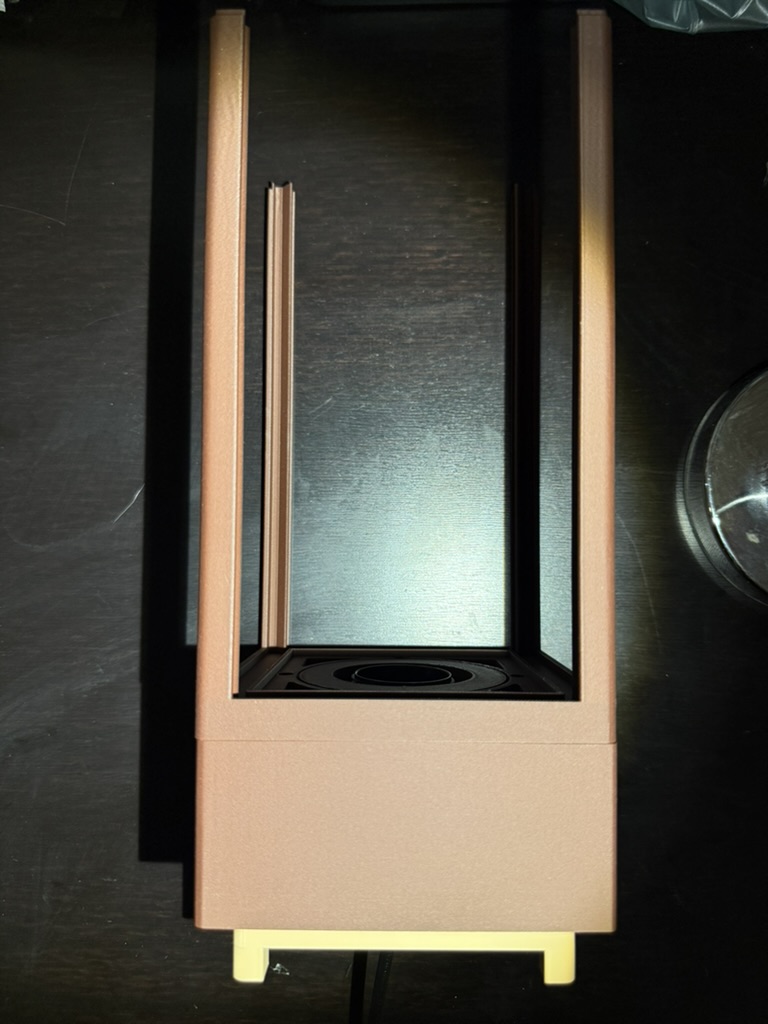
Once that is done, all that's really left is to put in the light bulb, the shade, and the walls in and screw the top.
As a note , the shade is just fit in loosely and can be taken out and put back really easily.
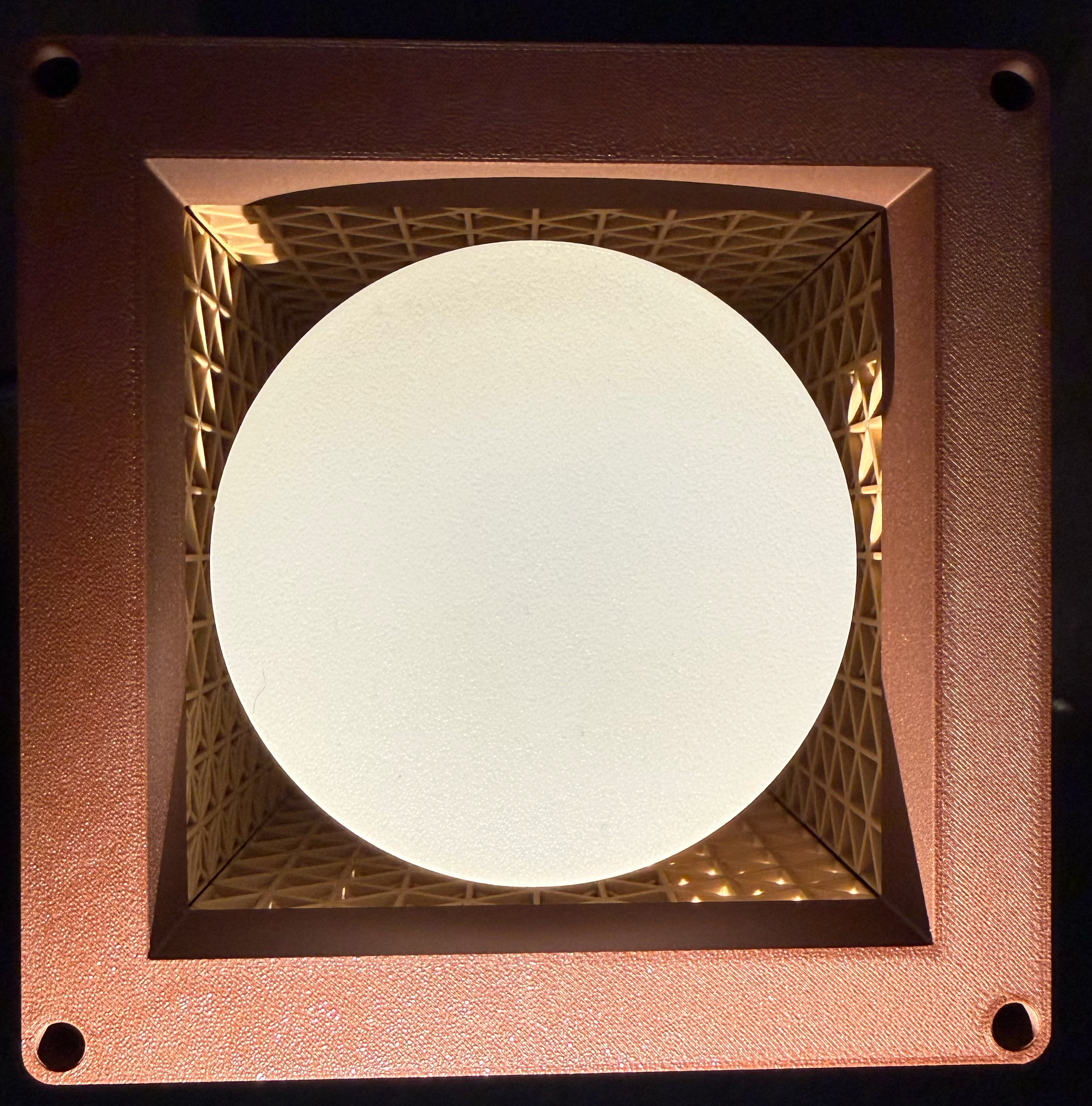
Screw in the four corners of the top (this might require a bit more work than the other ones), and tada!
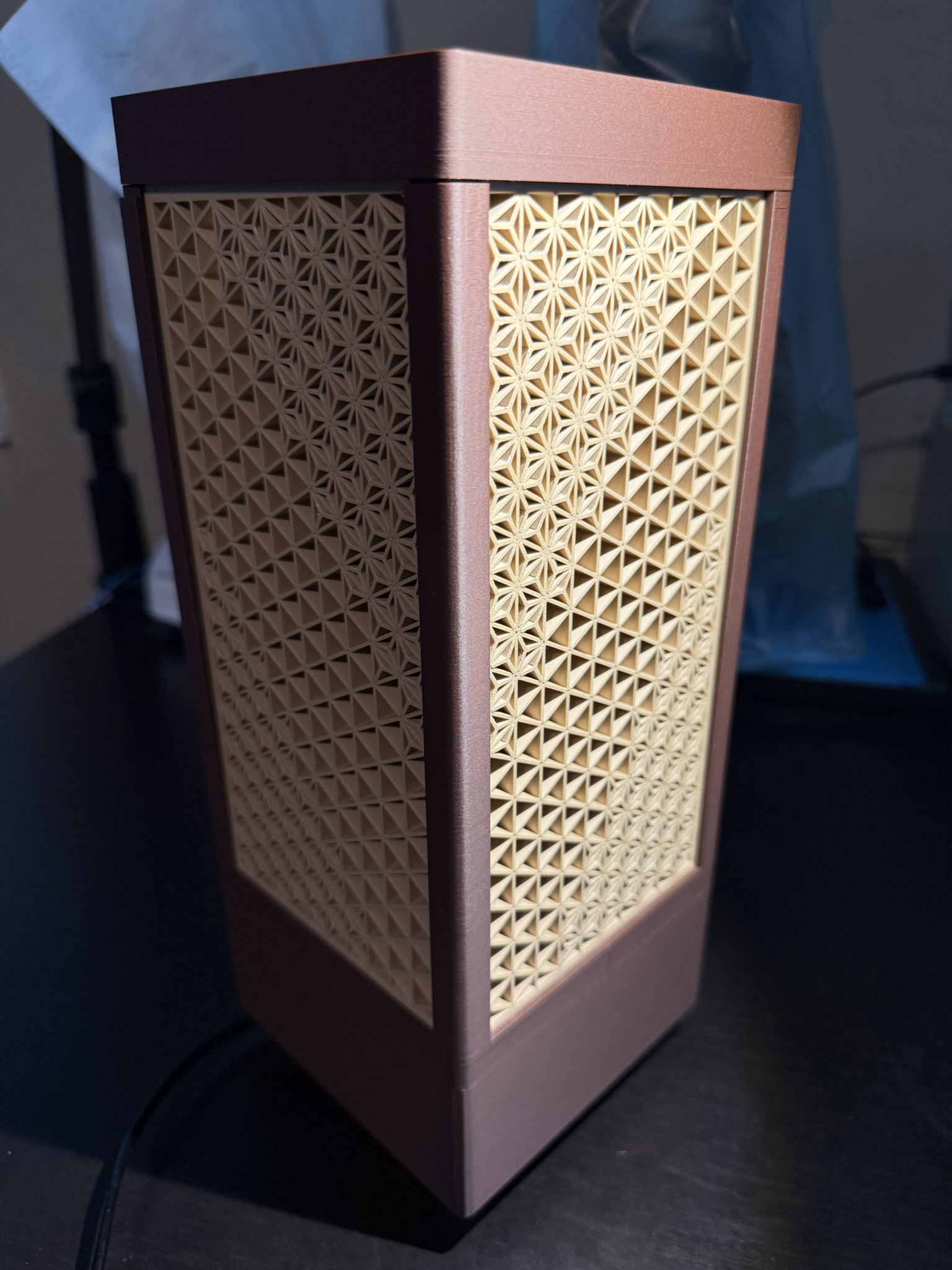
You got yourself a pretty cool lamp
A picture of my cat for the road.
Kumiko Lamp Build Log
Windows is what I typically just use for gaming and some general stuff, only one of my computers actually runs windows, definitely recommend setting up WSL for it
WSL
Since I run NixOS I use https://github.com/nix-community/NixOS-WSL
Following which I setup an SSH key and clone this repo (my nix config)
git clone git@github.com:rft/nix-config.git
git will likely be missing from a fresh NixOS install, you can add git temporarily with nix quite easily with nix shell nixpkgs#git
after it has been cloned I run sudo nixos-rebuild switch --flake .#mistletoe
"mistletoe" being what I defined my WSL host as.
Windows Software
Software list
- Powershell
- Everything
- windirstat
- Executor
- Blackblaze
- Prism Launcher
- wootility
- Air screen mirroring
- Bambu Studio
- Naps2
- Raindrops
- Autohotkey
- mpv.net
- lossless cut
Powershell
If you want to keep your sanity on windows use powershell, makes you feel more at home if you are used to bash, no longer will you type "ls" and be rejected by windows for not typing "dir" instead
In some ways it's actually better than bash, since it lets you move objects down the pipeline, but given the option I am usually in WSL instead, still though it's not too bad, and becomes really nice with the extensions listed later below.
Powershell is usually installed by default, but with whatever version on windows it can be quite old, so I would suggest you get the latest elsewhere. It should be available via winget or on the appstore
winget install -e --id Microsoft.PowerShell
Everything
Executor
- Might be marked as a virus (allow through defender)
- make sure to mark launch on startup
- Change keybind to win + alt + A
Quick install via winget
winget install --id=Obsidian.Obsidian  -e
winget install --id=Valve.Steam  -e
winget install --id=Discord.Discord  -e
winget install --id=Spotify.Spotify  -e
winget install --id=Flameshot.Flameshot  -e
winget install --id=WerWolv.ImHex  -e
winget install --id=calibre.calibre  -e
winget install --id=SolveSpace.SolveSpace  -e
winget install --id=Cockos.REAPER  -e
winget install --id=Audacity.Audacity  -e
winget install --id=Cyanfish.NAPS2  -e
winget install --id=AutoHotkey.AutoHotkey  -e
winget install --id=RustemMussabekov.Raindrop  -e
winget install --id=BlenderFoundation.Blender  -e
winget install --id=OpenStenoProject.Plover  -e
winget install --id=Anki.Anki  -e
winget install --id=WinDirStat.WinDirStat  -e
winget install --id=voidtools.Everything  -e
winget install --id=PrismLauncher.PrismLauncher  -e
winget install --id=WiresharkFoundation.Wireshark  -e
winget install --id=OBSProject.OBSStudio  -e
winget install --id=ajeetdsouza.zoxide  -e
winget install --id=DebaucheeOpenSourceGroup.Barrier  -e
winget install --id=Bitwarden.Bitwarden  -e
winget install --id=Microsoft.VisualStudioCode  -e
winget install --id=MartinBresson.Executor  -e
winget install --id=Bambulab.Bambustudio  -e
winget install --id=Ablaze.Floorp  -e
winget install --id=Vivaldi.Vivaldi  -e
winget install --id=VideoLAN.VLC  -e
winget install --id=mpv.net  -e
winget install --id=BurntSushi.ripgrep.GNU  -e
winget install --id=sharkdp.fd  -e
winget install --id=ch.LosslessCut  -e
winget install --id=RevoUninstaller.RevoUninstaller  -e
winget install --id=Rufus.Rufus  -e
winget install -e --id Microsoft.Sysinternals.ProcessExplorer
App Store
There are a few things I get from the Appstore, mainly for convenience
- Oh my posh
- Powertoys
- Icloud
- Wolfram Alpha
- Devtoys
Settings
Disable suggest snap when snapping window to side
- System > Multitasking
- Click dropdown arrow and uncheck "When I snap a window, suggest what I can snap next to it"
Disable "ads"
- Personalization > Lockscreen
- Uncheck "Get fun facts, tips, tricks and more on your lock screen"
- Personalize your lock screen > picture
Enable Hibernation
- Open the old control panel (Might need to search)
- Power Options > Choose what the power buttons do > Check hibernation
System > Multitasking
- Click dropdown arrow and uncheck "When I snap a window, suggest what I can snap next to it"
Terminal
- Psreadline
- Zoxide
- oh my posh
- alias pwsh=“/mnt/c/Program\ Files/Powershell/7/pwsh.exe”
- alias vi=nvim
- alias vim=nvim
- alias cd=z
⚠️ **Warning**: Make sure powershell version is > 6 `$PSVersionTable.PSVersion` to check
Hide other stuff from terminal
Profiles > Azure/Command promt, > Hide porfile form dropdown
Oh My Posh
A bit of software that makes your terminal look nice
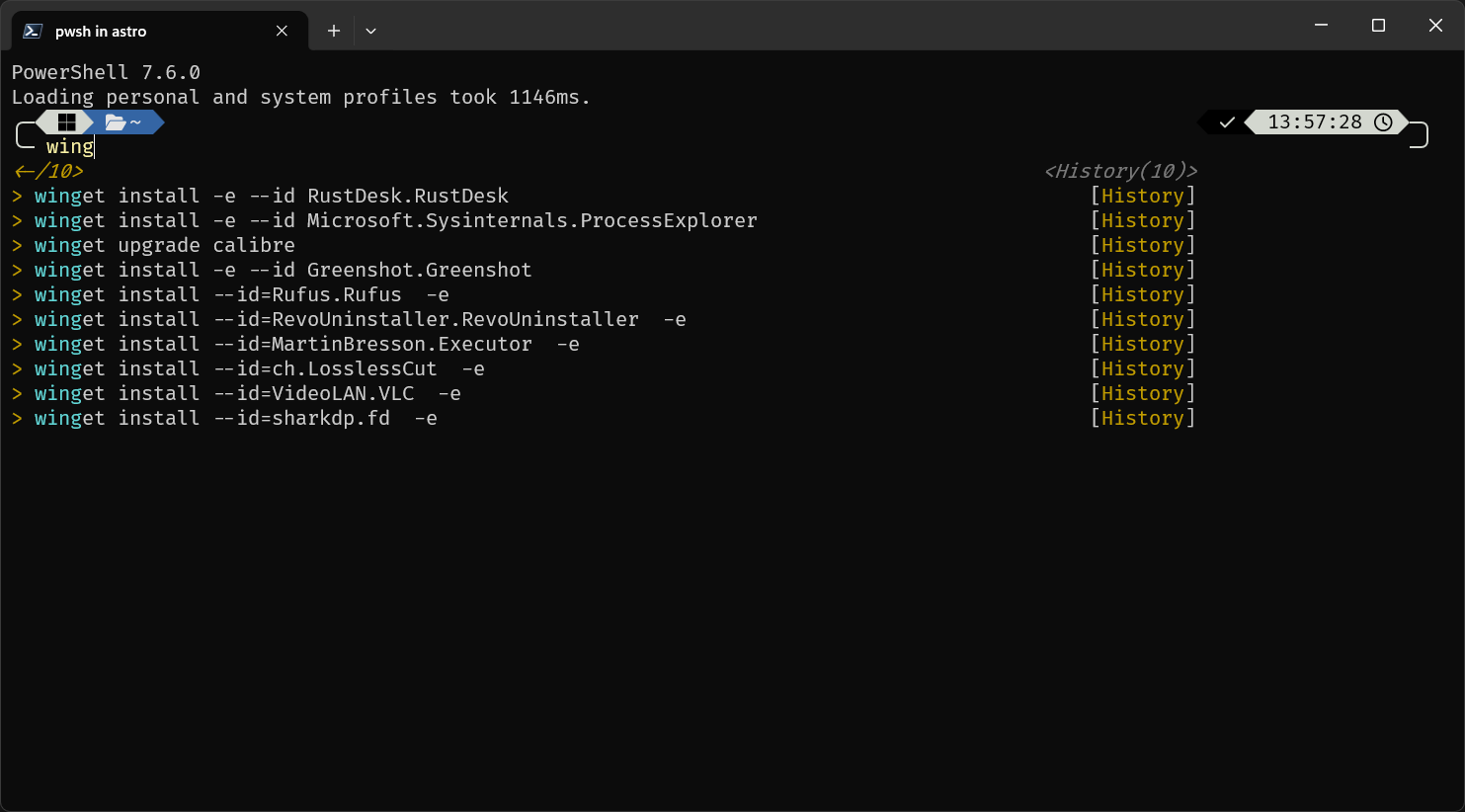
winget install JanDeDobbeleer.OhMyPosh --source winget --scope user --force
or get it on the windows app store
https://ohmyposh.dev/docs/installation/windows
Add required stuff to path
If you downloaded via the app store you do not need to follow these steps
- search environment variables on windows search and click on
edit environment variables for account - from there click on
Environment Variables... - from there click on
PATHand addC:\Users\<youruser>\AppData\Local\Programs\oh-my-posh\bin\ - for themes create a new variable called
POSH_THEMES_PATHand addC:\Users\<youruser>\AppData\Local\Programs\oh-my-posh\themes\
Create powershell profile
if using a newer version of powershell it will ask if you want a profile made.
if you do run notepad $PROFILE
if it fails (likely means your powershell version is old) you can run
if (!(Test-Path -Path $PROFILE)) { New-Item -ItemType File -Path $PROFILE -Force }
but I would recommend you update instead!
Add required software
https://github.com/PowerShell/PSReadLine
From an elevated terminal run
Install-Module -Name PowerShellGet -Force; exit
Install-Module PSReadLine -Repository PSGallery -Scope CurrentUser -AllowPrerelease -Force
https://github.com/devblackops/Terminal-Icons
Install-Module -Name Terminal-Icons -Repository PSGallery
View profile
notepad $PROFILE
oh-my-posh init pwsh --config "$env:POSH_THEMES_PATH\powerlevel10k_rainbow.omp.json" | Invoke-Expression

Import-Module -Name Terminal-Icons
Import-Module -Name PSReadLine

Set-PSReadLineOption -PredictionSource History
Set-PSReadLineOption -PredictionViewStyle listView
Set-PSReadLineOption -EditMode Windows

Invoke-Expression (& {
	$hook = if ($PSVersionTable.PSVersion.Major -lt 6) { 'prompt' } else { "pwd" }
	(zoxide init --hook $hook powershell | Out-String)
})
Starting directory
%USERPROFILE%
Windows Setup